Magnets aren’t US anymore

The permanent magnetic is a quiet, unobtrusive work horse in so many applications that it, like many things that are mechatronics related, is mind bogglingly (is that a word?) pervasive.  Magnets are the key material technology to enable high efficiency and power dense electric motors.  And electric motors are everywhere.

magnet

The particular magentic material that has enabled the CD, DVD, Hard Disk Drive, high performance speakers, magnetic resonance imaging and many other technical wonders, is Neodymium Iron Boron.  Based on General Motors research on magnet materials (in the 1980’s), scientists found a particular molecule of these materials which exhibited extremely high magnetic strength.  And, of course, one of the immediate benefits would be reducing the size of starter motors in cars by 30% and the weight of the motors by even more.  Great stuff!

But making the molecule wasn’t exactly a picnic.  Alloying was easy, but it turned out you had to cool the material down suddenly in order to get just the right molecule to form in a powder and then sinter and magnetize the result.  A whole new process had to be developed, called spin casting, to cool the material quickly enough to generate high quality raw material for NeFeB magnets.   I’m sure there are a lot more technical details, but I don’t remember much from my tour of the GM Magnequench facility in Indiana.  It’s been several years.

NeFeB alloy has been dramatically improved and as demand has increased, fortunately, the price has dropped from the extremely high levels during it’s introduction.  As prices have declined it is estimated that 16,571 tons of Neodymium were used in magnet making in 2009 and 24,635 tons will be used by the year 2014.  That’s an increase of 48% in five years.  That’s huge.

The reason for all the increase is the fact that NeFeB magnets make really efficient motors.  So the new generation of appliance motors and air conditioning compressort that include NeFeB magnetics to increase the flux of the rotor combined with electric and hybrid car motors are driving demand more more magnets.  And now some emerging technology in the wind power marketplace, direct drive generators, will require many tons of additional material.

But what about our friends at GM Magnequench?  They’re gone!  The great future, full of potential for a US manufacturing company, lost to the sale of the company and closing the manufacturing facility.  GM sold the company to New Materials Technology in Toronto which is owned by China.  But the new owners couldn’t run the US factory at a profit.  Even at $20/hour for labor.  All the manufacturing jobs, gone.

There is currently no NeFeB magnet manufacturing in the US.  Which is kind of crazy when you think of all the applications we have for the stuff.  Even worse is the fact that a lot of advanced military hardware is dependent upon the magnets for guidance motors on missiles and a host of other applications.  And according to one source China now owns 97% of the world’s Rare Earth Elements sources.    Which is why there are now hundreds of companies in China selling magnets.

On the positive side, this has lead to overall declining prices for these magnets.  But will that continue to be the case?  The Chinese government is expecting to decrease their exports of magnets by 34% next year.  This could spell trouble for many companies.

But there is hope. The USGS has reported that the Mountain Pass Mine in Southern California is one of the largest and richest deposits of Rare Earths, including Neodymium, in the world.  And Molycorp is ramping up to fill the gap with new mining and manufacturing capacity.  Go get ‘em guys! Free enterprise at work.

Response to Big Wind

There were a number of emails relating to the posting on Big Wind a few weeks ago and I would like to make some clarifications.  My numbers were off, primarily based on the fact that “retail” rates for electricity such as you and I pay, are much higher than the wholesale rate which utilities pay.  The actual cost of electricity is around 4 to 5 cents depending on a variety of conditions that can influence the rate.  Based on that fact, the estimated payback for a large scale wind turbine is 2.5 times longer than my estimate in the posting.

In an effort to check the facts, I visited the American Wind Energy Association website.  There is a brief article (www.awea.org/pubs/factsheets/EconomicsOfWind-Feb2005.pdf)  that goes into some detail on the costs of large wind projects.  I used some of that information for a reality check.  They put a utility scale project analysis in the article that starts with a 50 MW capacity.  They say that a project this size would probably cost around $65 million to install.  I put in the recently published national average $1.93 million dollars per megawatt and got $96 million, a whole lot more expensive.

If the turbines are located on a site with wind available 35% of the time, and that’s a big number, the site should generate 150 million kilowatt hours per year.  The revenue will be around $6 to $6.75 million dollars a year not including maintenance, property taxes, management costs, etc.  Best case, the project will break even in about 10 or 11 years.  Worst case, 15 or more. Don’t know if the life expectancy of the equipment is 20 or 25 years.  I’ll check into that.

And by the way, medium size photovoltaic projects operate on about the same basis.  They are too expensive to make it worthwhile to take your home off the grid.  So the DOE’s “Million Roofs on Solar” project is doomed.  You can legislate a program, but you can’t make it work unless it pays for itself.  And the government doesn’t have enough money to pay for it for you.

These are really big numbers to be tossing around, and it makes me uncomfortable that the mainstream press doesn’t report on the facts.  Maybe that’s too much to ask.  It is a somewhat technical subject.

OK.  Here’s the real point.  The projects have many financial incentives like State and Federal subsidies, accelerated depreciation and investment tax credits helping to subsidize the costs.  That’s how we get to payback periods of 6 to 8 years.    So my math was wrong, but the final results are as represented.

When politicians make policy without facts, it comes out wrong.  Wind is great.  I am an avid wind energy enthusiast.  But we cannot create these massive alternative energy industries with billions of dollars of commerce that require government subsidies in order to operate.

I have done some numerical analysis of the wind energy problem and there are solutions that will result in 2 year paybacks for investors.  We need more innovation that integrates financial responsibility in the equation.  This is the kind of engineering that is self sustaining and will result in new jobs without government subsidies.

Big Wind and the Absolute Cost of Technology

July 19, 2009 by Steve Meyer  
Filed under Commentary, Design, Green Energy, Solar Power

The American Wind Energy Association published results for last year’s spending on wind energy.  The US spent $16.4B on new wind tubines and installed 8500 megawatts of generating capacity.  That’s $1.93 million dollars per megawatt of capacity.  That’s a lot of money.  Especially when a megawatt of capacity of wind energy may only produce 300kW of actual power based on the amount of wind that can be harvested.

The efficiency rating of a wind generator is not related to the equipment, but rather to the average wind speed and number of hours out of a year’s time that the system is generating power.  So this number can vary quite a bit, and of course, the generated electricity varies with the wind.  So a lot of effort is put into the site survey to determine if a particular location can generate enough power to pay back the cost of the equipment.

At 30% efficiency the average power generated is 300kW.  This is enough electricity to power 231 homes if the homes are all using about 1300 kWh per month.  Personally, I have not been able to get my power usage under 200kWh per month, so it might be many less homes in actual practice, but you get the idea.  If you are paying 11.5 cents per kilowatt hour that’s only $149 per month in electricity.  So the revenue for 1 megawatt of capacity is $34,535 per month.  And since a wind farm has operating costs, usually estimated at 10%, the revenue minus operating cost is $31,082.  To pay off that $1.93 million invested will take 62 months.  Sure, it will go a lot quicker if the electricity rate is high like in California.  But it looks like everyone is making money at this alternative energy stuff except the consumer.

Texas has very low energy costs to begin with, and solar power has slightly lower net efficiency than wind power due to the number of hours of daylight, the number of days of sunshine, etc.  So the local utility has begun suggesting to customers that because of expensive investments in wind and solar alternative energy systems, that we (the customers) will have to pay increasing rates for power to “help shoulder the costs”.   Really?  I thought all this alternative energy stuff was going to lower our costs.

I’m not a financial genius, but I can tell there’s a problem.  Especially when no one in the alternative energy industry ever talks about return on investment. We have to focus on technology that has better financial performance.  And I think it’s out there, and my company is working on some of the solutions.  We’re just stuck behind the slow moving giants of the industry who are dominating the landscape.  It’s time for some of that Yankee Ingenuity to come to the forefront.

Top 10 Mechatronic Challenges

I recently wrote on the mechatronic challenge of wind power.  Converting wind into mechanical power that can be harnessed for man’s use has been going on since the 9th Century according to Persian historians.  Certainly wind powered grinding of grains has been around in Europe for several centuries and, lest we forget, wind power pumping of water in the United States.  So there is some irony to the cultural “buzz” about wind power at home and abroad, as if the technology were entirely new.  There’s a lot of history, we’re just updating the technology to produce energy in the age of electricity.

Water has been used for power generation as well.  Following a similar path, we learned during the early part of the industrial revolution how to locate manufacturing plants near waterways so we could convert water flow into mechanical power using the water wheel.  This is, in fact the root of all modern motion control.  All the belts and pulleys, cams, gear reduction systems follow from the work done in mechanical engineering from this period of time.  All of the electronic analogs of the mechanical behaviors found in mechanical systems are the functions which we refer to in mechatronics today.

Wind power and water power gave way in the 1800’s to steam power as the improved steam engine of Watt became the standard of energy efficiency, or should I say “cost effectiveness”.  Because the absolute value of technology is in its cost effectiveness.

Still, wind energy poses a huge technology challenge, as witnessed by the number of vairations that exist and new versions that are emerging.  And hopefully improvements will continue to come from the creativity and  imagination of engineers and inventors all over the world.

But what are the other big mechatronic challenges that come to mind?

Transportation certainly ranks in the top 10.  We have seen hydraulic, pneumatic and electric vehicle solutions touted for a variety of uses, personal transport, delivery vehicles etc.  Ballard Energy and General Motors have both been building hybrid and pure electric buses for city transportation systems for several years with some success.  Interestingly, the electric bus is easier to engineer, which seems unreasonable, but the bus has more interior space to put things like batteries and a methanol converter for generating hydrogen for fuel cells.

But there is a great lesson in what appears to be an almost chaotic string of choices in the transportation arena.  One solution will not work for all requirements.  There are many people for whom a 40 mile per day drive cycle is perfect.  The NEV, Neighborhhod Electric Vehicle, is a golf cart type solution that is rated for street usage, and because of its relatively simple performance requirements, is relatively easy to achieve and lowe cost.  As we categorize cars with greater range, the problems get more difficult, and because of the storage limitations of batteries, have only been achievable as hybrids.  But with some hybrid designs reaching 50 and 60 mpg (estimated), these vehicles may be great solutions for other users.  Although, we must consider their cost effectiveness.  If they cannot be introduced at prices well below $50,000 the absolute value of the technology is not very good.

So forget the 15 second soundbyte that will solve the world’s problems.  It doesn’t presently exist.

I would like to hear from any readers about their picks for the Top Ten Mechatronic Challenge.

Wind Energy and Mechatronics

April 10, 2009 by admin  
Filed under Commentary, Green Engineering

By Steve Meyer,
CEO/Senior Consultant
Solid Tech Inc.

What would you put on a “Top Ten” list of the toughest mechatronic applications of all time? The electric car, plug-in or hybrid is certainly on the list.

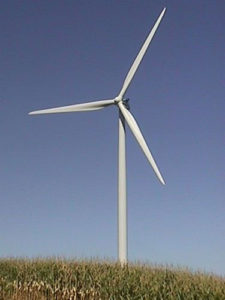
One application that needs to be on the list is the Wind Turbine. It is a mechatronic challenge because it combines the aerodynamics of rotor design, the mechanics of a gear reduction system, the electromagnetics of an electric generator and the power electronics system for output power conditioning and synchronization to the utility grid system, all of which is designed in the range of 1000 to 4000 hp.

Each portion of the system must be designed in conjunction with the other systems to achieve the overall goals of efficient net power conversion.  Plus, wind turbine hardware has constraints that are different from other forms of equipment.  In addition to efficiency, another top priority of wind power turbines is life expectancy. The manufacturing constraints those priorities create are a nightmare.

Since most wind turbines sit on top of 150 ft tall masts, the systems are also weight constrained.  Other constraints include a second axis of motion that pivots the nacelle that houses the gear reducer and generator.  It can weigh more than 5 school buses. Then, the whole assembly must steer into the wind.  Sounds like fun.

The efficiency of the rotor at a variety of wind speeds is totally an aerodynamic issue. While this not my area of expertise, even with my limited background, it is clearly a problem since wind speeds vary constantly.  The consequence of this dynamic is that the rotor speed cannot be predicted.  Therefore, the electrical system must take a varying input and convert it to dc and then back to
synchronous ac, or control the speed of the rotor and waste some of the input energy.

The gear system requires large-scale, precise machining.  Not so much because there is some accuracy required in the load, but for efficiency and minimal wear.  Only a few companies in the world are able to produce these systems, and the current orders are backlogged to 2011.

Manufacturers have found that wind turbines are more cost effective the bigger they are.  This makes sense on the motor side because power increases with the square of the radius.  But it sure makes everything more difficult.  The mast and cantilever load of the turbine and propellers is huge.

But all that engineering has to be done inside a cost envelope.  According to the Danish Wind Energy group, a typical 600 kW system costs around $450,000.  Installation costs will be $135,000, making the initial cost $585,000.  If the unit produces 1,500,000 kWh hour a year at 0.05/kWh it generates $75,000 that year minus an average maintenance cost of $6,750.  At a cash flow rate of $68,250 a year, it will take 8.4 years to break even, not including discounted cash calculations.

You can play with the numbers on line at the Danish Wind Energy website.  The US utilities are regulated in how much they can get for power.  At 0.10/kWh the payback is 4.2 years.  But what if the wind estimates are too high?  That’s a lot of money.

The public policy question is how much government funding is going in to this arena?  Is the Federal or State government offering subsidies to facilitate the adoption of the technology?  If so, shouldn’t we be getting a discount on our electric bill if taxpayer money is used?

wind-turbine
Footnote: The Global Wind Energy Council in Brussels reports that installed capacity for wind power worldwide was up 28.8% last year with the US increasing its base by over 50% and edging out Germany as the leading user of wind power in the world.  Interestingly, China, often accused of being one of the most environmentally irresponsible countries, is the No. 4 user of wind power in terms of installed base with similar growth over last year.  Maybe some things are headed in the right direction.