
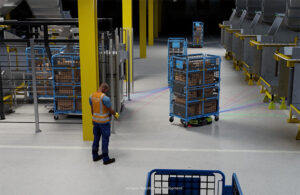
NVIDIA announces new features and capabilities that support the acceleration and growth of AI-based solutions for robotics and simulation.
Intel Labs introduces open-source simulator for AI

Intel Labs collaborated with the Computer Vision Center in Spain, Kujiale in China, and the Technical University of Munich to develop the Simulator for Photorealistic Embodied AI Research (SPEAR).
Realtime Robotics integrates RapidPlan software with Siemens Process Simulate
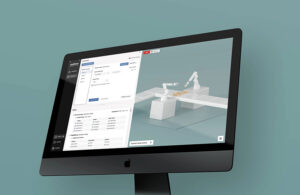
The partnership will allow customers to use Realtime Robotics’ motion planning and control software without leaving Siemens Process Simulate.
Seegrid and Applied Intuition partner to improve AMR simulations
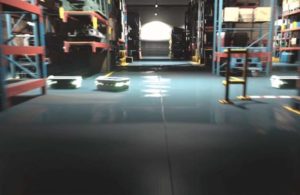
The two companies will push the envelope of the state of the art in AMR simulations.
Ambi Robotics closes $26M Series A to begin growth
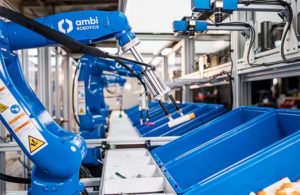
AmbiOS uses sIm-to-real techniques to reduce model training time and improve grasping success.
Waymo SimulationCity is a powerful tool for testing autonomous driving
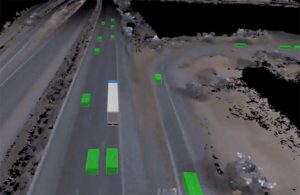
Waymo provides a glimpse at its SimulationCity software environment that it uses to test and validate driving algorithms.
KUKA releases new version of KUKA.sim
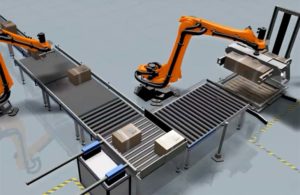
KUKA releases version 4.0 of the KUKA.sim virtual robot simulation software. The release includes advanced programming features along with new safety simulation capabilities.
Open Robotics releases Ignition Edifice simulation software

Open Robotics released the latest version of its Gazebo simulator, called Edifice. The release includes the latest rendering features, as well as new sensors and controllers.
Digital twins, AR/VR bring simulation benefits to industrial automation users, says Siemens
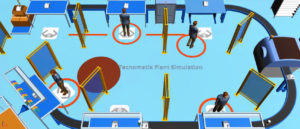
In this Q&A, Vincent Guo from Siemens Digital Industries Software discusses how digital twins, augmented reality, and virtual reality can help production environments with productivity and social distancing.
Rapid Prototype Trends

3D solid model software has come a long way. It makes complex finite element analysis an integrated feature so that new designs can be explored in hours, rather than days or weeks of building prototype parts and making changes. New product development costs have been falling consistently since the advent of this technology. The logical […]
The Tools, They are a Changing’
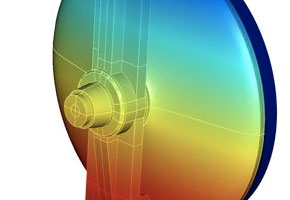
(regarding the title, just think Bob Dylan’s “The Times They are a Changin”) Just as Computer Aided Design, CAD, has revolutionized the design process, it is growing in capability and impacting many other arenas of engineering. The first major extensions to CAD were integration of Finite Element Analysis, the ability to analyze loads on the […]
Does More Simulation Mean Companies Profit More From Its Use?
BOSTON, MA — Increasing product complexity combined with the ever pressing market pressures to develop these products faster and cheaper requires new ways of exploring product performance. A recent report by Aberdeen Group, a Harte-Hanks Company (NYSE: HHS), “Engineering Evolved: Getting Mechatronics Performance Right the First Time,” finds that an increasing number of companies are […]
Tradeoffs and Triangles
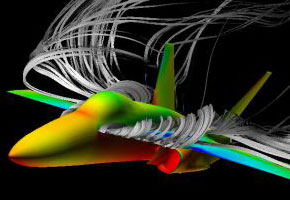
The activity of optimization involves trade off analysis. The goal is to improve performance or cost effectiveness, or both if possible. Nowadays, we have some really sophisticated software tools that allow us to simulate the behavior of complex systems. Computational fluid dynamics, magnetic field simulations, thermal imaging, finite element analysis are a few of the […]
Mechatronic Tidal Simulation Assists Scientists
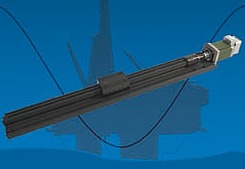
Scientists from London’s Imperial College are using the new RT3 version of the Reliance Cool Muscle NEMA 23 integrated servo system to reproduce the sub-surface pressure changes created by lunar tides in laboratory research experiments directed at improving oil recovery. The unique abilities of the RT3 version along with the support provided by Reliance allow […]