Tips for Improving Mechatronic Collaboration

February 14, 2010 by admin  
Filed under Commentary, Design, Technology

By Leslie Langnau, Managing Editor

The use of mechatronics principles should make new product/device design faster, easier, and deliver fabulous and inexpensive products. But many engineering groups grapple with this design approach. Why do some groups work while others struggle?

We’ve heard about the promise of mechatronics for many years. Off-the-record, we hear comments about the “problems with mechatronics.” Some engineering groups get it and apply it with great success. Others don’t even want to hear the term. But there is no denying that whatever you call it, this approach to design is necessary in today’s world of multifunction, multitasking equipment and systems.

You don’t have to refer to this approach as mechatronics. Said Kevin C. Craig, Ph.D., Professor of Mechanical Engineering, Marquette University, “I define mechatronics as multidisciplinary engineering system design.” This definition is much more descriptive.

A number of engineers and managers are looking into why this approach appears to either not deliver on its promises or why it only works for some. Their research so far indicates that there are three main problems: Education, corporate structure, and the lack of truly collaborative design tools.

Education should break down the walls, but …
Years ago, the wall between manufacturing and engineering had to come down before industry realized measureable improvements in productivity. A similar situation faces those who wish to implement mechatronics, only this time the walls that must come down are those between engineering disciplines.

Education has played a role in building those walls, partly in response to demands of last century’s corporations and labor unions who segregated engineering manpower into separate functions; mechanical, electrical, and others. Today, inertia maintains the status quo with many universities and colleges continuing to segregate engineering disciplines. Even the professors don’t collaborate with each other! The result is mono-functional engineers (a new term that you may hear more of soon).

This singular focus has created engineers who speak a different engineering language from each other. Noted John Pritchard, global product manager, Kinetix Motion Control, Rockwell Automation, “At a recent workshop with 50 engineers pulled from all areas of a company, the language discrepancies were clear. We were discussing how to take a mechatronic approach to robot design. In the conversation, the mechanical engineers spoke about their struggles with reverse dynamics. The control guys said their biggest challenge was Cartesian to joint transforms. This conversation went on for ten minutes before they realized they were talking about the same thing, just using different words. The control guys were thinking about math while the mechanical guys were thinking about links, angles, and so on. For this group, the solution was to speak mathematics.”

More collaborative software tools are coming that will move mechanical, electrical, and controls design information in both directions among the engineering groups.

A few educators are aware of this issue and are initiating a profound change, which we will go into shortly.

Another educationally based problem involves awareness; the decisions any engineer makes can affect other engineers’ choices for a design. “Lack of such awareness trips up many projects,” agreed Pritchard. “The choice of material is a fairly common decision that causes problems. For example, in the design of a reciprocating mechanism controlled by a servo system, a mechanical engineer may choose steel over aluminum. The steel may be more readily available, less expensive, standard practice, and so on. The control engineer, however, is now confronted by several constraints because of this choice. The servo motor must have three times the peak torque to accelerate at the same rate it would have needed had the mechanical engineer gone with aluminum. In addition, the design will need a bigger motor, bigger drive and circuit breaker, heavier wiring, bigger amp supply, bigger everything.

“The mechanical engineer may have no idea how the design of one part impacts the overall machine. A 10¢ per part saving may really result in up to $10,000 additional cost in order for the control engineer to deal with the larger inertia. And there are many choices like this; couplings, compliance, gearbos backlash, and so on,” continued Pritchard. “And the control engineers and the electrical engineers do the same thing; trapezoidal acceleration, for example, can excite resonances which can frustrate the mechanical engineers. Another example is the common practice of putting acceleration at 100% rather than a lower percentage, which can impact wear.”

Here’s an example of a mechanically oriented motion analyzer, the result of collaboration between Solidworks and Rockwell Automation.

“And control systems is one of the more important disciplines for mechanical and electrical engineers to have some knowledge of,” added Razvan Panaitescu, manager of Engineering for Mechatronics, Siemens. “It stands in between mechanical and electrical. You don’t need to know electronics deeply, just enough to model.”

A few professors have witnessed this lack of awareness and are developing programs that will not only solve it, but that will create shifts in the traditional engineering labor pool.

A change is coming
Ken Ryan, Director of the Center for Applied Mechatronics at Alexandria Technical College in Minn., spoke about what educational institutions can do to resolve these issues. He sees the engineering role shifting into two main categories: the specialist engineer (which is probably most of you) and the cross functional engineer.

The Specialist or mono-functional engineer is the traditional Mechanical Engineer (ME), Electrical Engineer (EE), Controls Engineer (CE) and so on. These individuals are experts in their chosen field. “Industry will always need these individuals,” said Ryan, “but not in the numbers that they have hired previously. I see a day when a company’s engineering labor force will consist of about 20% of these specialists.”

The Cross-Functional engineer is essentially the mechatronics engineer. This individual has more of a breadth of training, learning much about multiple engineering disciplines but typically not to the depth of the specialist engineer. These are the people corporations need to make mechatronics programs successful. Noted Ryan, “I think these people will make up about 40% of the engineering labor pool in a typical corporation.”

The cross-functional engineer can be further divided into two categories:

The Technologist: This individual is meant to be the functional extension of the traditional engineer; they implement the designs of the specialist. She/he is a member of a mechatronics team and will often function as a liaison among the specialists. This individual’s role is coordinative and integrative, both vertically and horizontally.

The Technician: This individual does what an engineer tells him/her to do. They are responsible for installation, service, and maintenance of mechatronically designed equipment. The remaining 40% of a corporation’s engineering pool will likely consist of these skills.

Mechatronics requires that either you master more than one or two engineering disciplines, or you develop a group of generalists to support the specialists. The cross-functional engineer will never replace the specialist engineer because they do not have a comparable depth of knowledge.

At Alexandria Technical College, the program is very successful. The college is in the middle of a huge packaging machinery area. By developing a cross-functional engineering program, graduate students find placement in all kinds of industry including transportation, mining, marine, automation, and other areas. “Once we took ourselves out of the packaging box,” said Ryan, “then we started finding lots of people interested in our students because these fields are all trans-functional fields.”

Corporate structure needs to nurture collaboration, not impede it
Global locations and engineers grouped by discipline do more to create miss-communications than solve it. “The biggest problem is interaction among disciplines,” noted Panaitescu. “Many corporations still physically group engineering disciplines so that engineers either work only with other engineers of their discipline, or they work in isolation.” The most successful companies have an open culture and nurture it.

Then there is the issue of cooperation, which can be sidetracked by corporate structure. “Engineers are naturally competitive,” said Panaitescu.

NI is also working on developing more collaborative design tools.

“But companies with more successful mechatronic design programs leverage the competitiveness between project-focused cross-functional engineering groups rather than having individual engineers competing against each other,” noted Pritchard. “The strategy of ‘which group will produce the best machine’ works well.”

Successful users of mechatronics also use a common design process that everyone sticks to. “One goal of a common design process is to ensure engineers check with each other throughout, ensuring that one decision does not impede future decisions from other engineers involved in the design,” said Panaitescu. “Corporations do not need to mandate that engineers attend communication classes; that is not the issue.”

Part of this common process involves the creation of a requirements document. It lays out in the beginning, what the design must do. Noted Panaitescu, “it is not often used because its not very interesting paperwork. But it can help speed product development.”

“The first step is to sit with the customer and decide what the device must do,” continued Panaitescu. “It will not significantly differ among projects. But if you define soundly, thoroughly, then everyone thrives. Naturally, the requirements will include performance, precision, timing, vibration and so on. But the requirements should also include how a system performs and how it will be designed; did you optimize that machine, reduce its carbon footprint? How much material did you put into the machine? These factors should be part of the mechatronics concept. The requirements change as we change. If you have such a process that incorporates physical mechatronics concepts with requirements concepts, then you have everyone in the team looking at the same goal, a common perspective.”

Proctor & Gamble, for example, has resolved many of these issues. Said Craig, “P&G has developed internal programs that have broken down the silos, embraced mechatronics, developed integrated design, and offer in-house courses that look at the mechanical, electrical, and controls. It’s doable.”

The need for truly interoperable software tools
The biggest issue with the various CAD and other product-development tools is that they do not offer the required level of interoperability that lets a controls engineer interact with the design of an electrical engineer.

“At first glimpse,” said Craig Therrien, product manager, Dassault Systèmes SolidWorks Corp., “it might appear that a simple movie of a machine in operation is all that is necessary for a collaborative mechatronics approach.

However, although a 3D-based mechanical CAD animation of intended machine function is a huge improvement over 2D drawings – and can help pinpoint potential collisions – it does not convey important engineering information that electronics and controls engineers need to select, size, and program the appropriate system. Nor can an animation alone help engineers factor the effect of their decisions into the mechanical design.”

Something more than moving pictures is needed to take advantage of mechatronics. Programs should provide control engineers access to mechanical engineering information, such as mass, material properties, moments of inertia, and force/torque requirements, to choose the most suitable electronic control mechanism. Mechanical engineers need to combine the loads created by specific electronic controls with the output of dynamics analyses to validate a system’s structural integrity. Controls programmers need to be sure the system functions as intended without any mechanical or electronics systems issues. In short, everyone involved needs an integrated mechatronics design environment that moves mechanical and controls design information in both directions. This helps the team to make important decisions and design modifications during the design cycle rather than as a result of costly prototyping.

Two soon-to-be-released examples of such a mechatronics environment are the integration between SolidWorks® Motion kinematics and dynamics analysis software and controls automation packages LabVIEW® from National Instruments and Motion Analyzer® from Rockwell Automation.

“With these integrated tools,” continued Therrien, “the mechanical engineer can model a machine in SolidWorks 3D CAD software and conduct kinematics and dynamics analyses in SolidWorks Motion software. Then, electronic systems engineers and control programmers can access the entire motion simulation from either LabVIEW or Motion Analyzer, including pertinent engineering data such as force, torque, and friction requirements, to design and program the control system. Finally, the mechanical engineer can access detailed controls information, such as the type of device or the size of the motor, to conduct additional stress and vibration analyses.

Noted Marc Monaghan, engineering systems manager at Hartness International, a manufacturer of packaging systems, “We are constantly looking for ways to reuse our design data, and the merging of mechatronic control simulation with mechanical design is an excellent approach. This integration extends the benefits of kinematic simulation into the arena of control programming, allowing the initial concepts of control logic to be designed and tested simultaneously with the mechanical function that it needs to control.

“Project timelines are more aggressive than ever, giving us much less time to develop designs with iterations of physical prototyping,” Monaghan added. “The integration of 3D modeling, analysis, and control development allows us to identify potential issues and opportunities for innovation long before the first part is produced. It is another step towards getting more problems solved during the design phase of a project, when cost savings and efficiency improvements deliver the most benefit.”

Engineers at NCR Ltd., a leading manufacturer of ATM machines, also desire and require better product design tools. According to Dr. John White, chief engineer at NCR, “We use mechatronics to optimize performance. An interoperable program, such as the SolidWorks and LabVIEW connection, gives our R&D teams the ability to develop a digital prototype in advance of a physical build. LabVIEW controls the motion trajectories while SolidWorks is used to calculate the driving forces, power requirements, and stresses. Connecting the control software to the mechanical assembly provides our engineers with the data needed for full design analysis and optimization. For us, it’s all about reliability through optimization.”

Dassault Systèmes SolidWorks Corp.
www.solidworks.com

National Instruments
www.ni.com

Rockwell Automation
www.rockwellautomation.com

Custom Transfer System Adds Value by the Millisecond

February 14, 2010 by admin  
Filed under Automation, Design, Motion Control, Technology

Services and products from hydraulics, pneumatics, electrics, and linear technology were linked by Rexroth engineers to produce a custom engineering concept for Swiss company Mikron Machining Technology. “The fact that Rexroth offers coordinated components from pneumatic, hydraulic and electric drive technology right through to high speed control enabled us to select the most suitable characteristics for specific functions,” said Rolf Held, design manager, Mikron. The result was a machine tool that makes real added value out of milliseconds.

The Mikron Multistep™ XT-200 has up to 54 NC axes and can be extended as required.

In a production environment, fractions of a second count and can accumulate to the extent that they affect cycle times. Automated transfer systems play a key role in many industries, particularly when metal parts must be processed using a number of different machining sequences. Suppliers to the automotive industry, for example, machine a number of items considerably more economically using intelligent transfer units. The machines pick up workpieces in clamping devices and transfer them automatically to the individual machining stations where they are drilled, milled, turned, chamfered or de-burred. Threads are cut and knurled profiles applied. Even peripheral processes such as installation operations or checks can be integrated into these transfer operations. With the transfer concept, all parts can be machined simultaneously.

The Multistep™ XT-200 is setting new standards for transfer systems – especially for the control speeds and the drives used for the various functions. The system makes precision manufacturing possible in non-stop operation. At the same time, the individual stations work practically hand in hand.

Extremely short chip-to-chip times ensure nearly continuous machining, and the system can even be used for high speed cutting. A key advantage is that it combines the productivity of a linear transfer machine with the flexible re-tooling capability of a machining center.

The concept is based on individual interlinked dual spindle modules, which can be used on a stand alone basis, or spread over up to four modules. Five interpolating CNC axes and up to 144 tools machine complex small and medium series parts on five and a half sides without remounting. If the parts are automatically re-mounted in-process, it is possible to machine six sides. The Multistep™ can be adapted to the production volume at any time. In addition, a loading and unloading station can assume the component feed function.

Without a break
While the main advantage of this machine is precision manufacturing almost without a break, further advantages come from the short chip-to-chip time of less than a second and the unusual dynamics. Accelerating the Rexroth CKK linear systems up to 1.4 g to 52 m per minute and spindles with speeds up to 40,000 rpm make for short machining cycles. This is where drive technology from Rexroth comes in: rodless pneumatic cylinders from the BRP Rexmover Series with a diameter of 50 mm and a stroke of 400 mm, as well as a linear axis Type CKK20-145 for strokes of up to 1,100 mm. The maximum force on this axis is around 72 kN in the direction of movement.

“At the end of the day it’s the number of milliseconds that we gain from a number of different points that is the decisive factor,” said Held.

The chuck for the C-axis in the loading and unloading station is pneumatically activated.

In the standard version, the Multistep™ is fitted with a high-speed CNC Rexroth IndraMotion MTX. Up to 64 axes can be operated in twelve CNC channels independently of one another. The maximum extended version features 54 axes that are required to work in parallel. “Using any other approach would mean that we would need at least two controls and we would have to combine these with each other,” said Held.

The PLC can process 1,000 instructions in 60 ms. At the same time the CNC offers, when controlling eight axes, an interpolation cycle time of 1 ms maximum. The Rexroth IndraDrive servo drives have integrated safety functions for secure hold and safe movement. “Also of interest is the so-called feedback capability, with which the generator capacity of the motors is fed back into the network during the braking operation,” noted Held. Mikron uses the force of hydraulic components for clamping the direct drive B/C axes. The tool clamping mechanisms in the motor spindles that close by means of spring assemblies are opened hydraulically. Here the valve blocks are the same for all spindle variations.

Movement of the Z-axis for the loading and unloading station is activated by a Rexroth IndraDrive Servo drive. In addition, the pneumatics ensure rapid, safe workpiece handling. Control is through a field bus.

When it comes to workpiece handling in the loading and unloading station as well as workpiece transfer, it is pneumatics that takes care of speed and safety. With the HF03-LG “light generation,” Mikron uses a light and compact variant of the HF valve series. It has a narrow valve width, yet can flow up to 700 standard liters. By using plastic plates, the weight can be reduced even further. The pneumatic and electric controls are located towards the front and arranged in one direction, thus offering increased installation potential, compactness and the possibility of adapting to the space available. By way of an alternative to the traditional multi-pole connection, a field bus connection is used.

Problem-free commissioning of Rexroth IndraDrive in the Mikron Multistep™ XT-200 control cabinet.

From a single source
When it comes to compressed air treatment, Series AS2 maintenance units feature a modular structure. The individual air treatment processes are brought together in maintenance units made from high quality plastic. Filtering, closed-loop control, lubricating and draining – the configuration is geared to user requirements. With the patented oil-fill system, the oil is directly extracted from the storage tank by suction using a hose. This means that the maintenance unit is protected against fouling by oil.

The maintenance units for the pneumatics are located, like the hydraulic power unit and the master control, in a separate control cabinet. The cabinet also houses the central lubrication, power connection and the fire extinguishing system. This arrangement corresponds to the modular structure of the Multistep™ and, by ensuring simple and rapid access to central components, guarantees that the unit is maintenance friendly.

Bosch Rexroth Group
www.boschrexroth-us.com

Magnets aren’t US anymore

The permanent magnetic is a quiet, unobtrusive work horse in so many applications that it, like many things that are mechatronics related, is mind bogglingly (is that a word?) pervasive.  Magnets are the key material technology to enable high efficiency and power dense electric motors.  And electric motors are everywhere.

magnet

The particular magentic material that has enabled the CD, DVD, Hard Disk Drive, high performance speakers, magnetic resonance imaging and many other technical wonders, is Neodymium Iron Boron.  Based on General Motors research on magnet materials (in the 1980’s), scientists found a particular molecule of these materials which exhibited extremely high magnetic strength.  And, of course, one of the immediate benefits would be reducing the size of starter motors in cars by 30% and the weight of the motors by even more.  Great stuff!

But making the molecule wasn’t exactly a picnic.  Alloying was easy, but it turned out you had to cool the material down suddenly in order to get just the right molecule to form in a powder and then sinter and magnetize the result.  A whole new process had to be developed, called spin casting, to cool the material quickly enough to generate high quality raw material for NeFeB magnets.   I’m sure there are a lot more technical details, but I don’t remember much from my tour of the GM Magnequench facility in Indiana.  It’s been several years.

NeFeB alloy has been dramatically improved and as demand has increased, fortunately, the price has dropped from the extremely high levels during it’s introduction.  As prices have declined it is estimated that 16,571 tons of Neodymium were used in magnet making in 2009 and 24,635 tons will be used by the year 2014.  That’s an increase of 48% in five years.  That’s huge.

The reason for all the increase is the fact that NeFeB magnets make really efficient motors.  So the new generation of appliance motors and air conditioning compressort that include NeFeB magnetics to increase the flux of the rotor combined with electric and hybrid car motors are driving demand more more magnets.  And now some emerging technology in the wind power marketplace, direct drive generators, will require many tons of additional material.

But what about our friends at GM Magnequench?  They’re gone!  The great future, full of potential for a US manufacturing company, lost to the sale of the company and closing the manufacturing facility.  GM sold the company to New Materials Technology in Toronto which is owned by China.  But the new owners couldn’t run the US factory at a profit.  Even at $20/hour for labor.  All the manufacturing jobs, gone.

There is currently no NeFeB magnet manufacturing in the US.  Which is kind of crazy when you think of all the applications we have for the stuff.  Even worse is the fact that a lot of advanced military hardware is dependent upon the magnets for guidance motors on missiles and a host of other applications.  And according to one source China now owns 97% of the world’s Rare Earth Elements sources.    Which is why there are now hundreds of companies in China selling magnets.

On the positive side, this has lead to overall declining prices for these magnets.  But will that continue to be the case?  The Chinese government is expecting to decrease their exports of magnets by 34% next year.  This could spell trouble for many companies.

But there is hope. The USGS has reported that the Mountain Pass Mine in Southern California is one of the largest and richest deposits of Rare Earths, including Neodymium, in the world.  And Molycorp is ramping up to fill the gap with new mining and manufacturing capacity.  Go get ‘em guys! Free enterprise at work.

Big Wind Machines

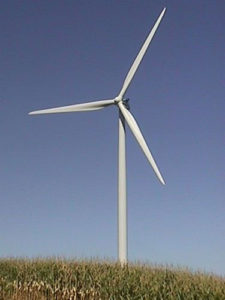
Recently I had occaision to discuss the merits of wind power with a colleague.  In particular there is a controversy between horizontal axis wind turbines, the giant propeller driven systems you see in advertisements, and vertical wind, which does not have much presence in the marketplace.  The premise is that horizontal systems can take advantage of the large swept area of the propeller blades to generate a great deal of force.  I’m not sure if this is supposed to imply that large swept areas intrinsically convert more kinetic energy from the wind into electricity.  And it is easy to conclude that this is the benefit of horizontal wind turbines.

Except that there is a fundamental mechatronic system at work.  The large propeller turns at low speeds, typically around 18 rpm on average, and there is a massive gearbox that is used to increase the speed of the output to turn a generator at high speed, which is typically where generators are most efficient.  The gear increaser has the effect of also increasing the amount of torque required at the input (propeller) by the gear ratio.  So if the gear increase is 100:1, then the propeller must be size 100 times larger in swept area in order to produce the needed torque to turn the generator.

This actually gets a bit worse since the mass, and it is very substantial, of the gear box itself represnts inertia that is resisting the turning of the blades.  And there is a generator rotor at the end of the gearbox whose mass (massive mass) is now resisting the turning of the propeller by the square of the ratio.  So if the ratio is 100:1, the inertia is increased by 10,000 times.  Even magnetic drag, or the residual attraction of the rotor to the stator, will get amplified in the same fashion, making it a significant force to contend with.

Add to this situaion a list of systems losses for overall fricitional loss of the bearings and gearbox, parasitic losses for steering and blade pitch adjustments.   Efficiency losses due to long distance transmission of power, that is a by-product of the remote sites that have favorable wind conditions.  It’s a pretty difficult situation to engineer.  And they keep proposing to build them bigger and bigger, hoping that the scale effect will overcome the problems.

All of the vertical wind systems I have seen so far are much smaller due to the fact that smaller rotors can turn at higher speed and power electric generators directly.  The flax axial generator is very popular in do-it-yourself designs that people are experimenting with in their back yards.

But vertical wind can also scale up.  And there are a few companies doing it.  With convertional wind power costing $2/watt, vertical systems could bring that price down very quickly and allow systems that can be installed close to the point of use or in offshore arrays where generation takes place almost 100% of the time.  Unlike the average 31% on the large land based systems.

Now that’s progress, 300% increase in energy generation at lower cost.  Hope it comes to market soon.


Big Wind Machines

Make the Right Design Moves with Mechatronics
By Mark D. Hinckley, Director-Mechatronics, SKF USA Inc.

Many electro-mechanical systems can qualify as mechatronic systems. Don’t agree? Take a look at these application examples that demonstrate both the power and potential of mechatronics in action.

Complete subsystem medical tables use mechatronics systems for precise multi-axis positioning.

Complete subsystem medical tables use mechatronics systems for precise multi-axis positioning.

Mechatronics integrates mechanical and electronic technologies with application-specific software to perform a particular task. Engineers who use mechatronic components and systems do so to focus on:
• improving precision, repetition, and flexibility in movement;
• saving energy;
• expanding function;
• reducing system size, weight, and footprint;
• and minimizing both the physical and audible environmental impact.
Mechatronic designs can be as elementary as “building block” components or as sophisticated as fully integrated systems. The basic building blocks are represented by individual components, such as linear bearings and guides, bearings integrated with sensors, or ball and roller screws.  You can specify these components individually in an application to help control movement, reduce friction, create a mechanism for driving linear motion, and even provide feedback on how fast equipment is rotating and in what position.

The next level combines components into a sub-system that serves as a self-contained unit to deliver more in terms of speed, strength, accuracy, reliability, or other measurement compared with basic building block components. Depending on application needs, sub-systems can include feedback devices to ascertain position or special configurations that can support structural loading. Some sub-systems will accommodate unique operating conditions while others fit more universal specifications.

Beyond sub-systems, fully integrated mechatronic systems offer “complete package” approaches that independently respond to inputs and offer real-time feedback and actions.  For example, an electric parking brake engineered as a mechatronic system can receive specific input about the
current operating condition from a CANbus network. In effect, the brake “knows” when it should activate or release, based upon programming in the integrated actuator specific to that vehicle.

Our applications casebook describes a range of examples demonstrating both the power and potential of mechatronics in action.

Modular actuation systems for patient beds convey precise, safe, secure, and reliable power-driven adjustment and positioning.

Modular actuation systems for patient beds convey precise, safe, secure, and reliable power-driven adjustment and positioning.

Linear ball bearings in stretcher-mounting system
Space is scarce inside ambulances, so placing and securing a stretcher can become an issue.  One mechatronic approach is to use linear ball bearings to guide the horizontal movement of a stretcher in and out of the ambulance.

The benefits here include high load-carrying capacity (to accommodate all sizes of patients), robustness and reliability, and the delivery of smooth, low-friction movement (greatly assisting EMTs).  In addition, the patient bed remains tightly secured during the ride in the ambulance.

Actuators onboard “factory on wheels”
In agricultural harvesting, the combine essentially serves as a “factory on wheels.”  Raw material is brought into this “factory” (harvested with the header) and proceeds through the machine where the crop (such as wheat) is separated from the chaff (waste) by the threshing mechanism.  The grain from the wheat passes over a sieve mechanism where it is sifted out of the waste and collected.  The chaff can then be reprocessed for complete threshing and then ejected from the rear of the combine.

Each of these processes requires movement. Since there is only one source of power (the engine), how and where to deliver that power is critical to machine function.  The prerequisite for any component is that it must be mechanically robust and able to survive in the dirty and dusty environment usually encountered.

Traditional components used to perform the necessary functions include belts, chains, or hydraulics.  Each presents its own challenges in delivering power to each point.  Applying tailored actuators for some operations, such as the threshing mechanism, cleansing fan, secondary separation system, sieve table, and auger, can improve the overall efficiency and reliability of the machine.

Electro-hydraulic steering system for off-road vehicles
Some applications can benefit from a combination of technologies, mechatronics and otherwise.  Electric steering offers flexibility and hydraulics delivers the necessary power density.  Combined, the two parts replace the traditional steering column with a more ergonomic design; reduce the number of parts; simplify assembly procedures and processes; and use less space.  Without the steering column operators experience less noise, better safety, and avoid hydraulic leaks in the cab.

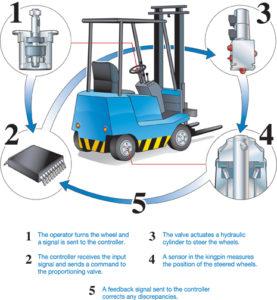
One example of a closed-loop system integrates: a mechanical/electronic (mechatronic) steering module; a controller regulating all steering functions; high resolution kingpin bearing sensors for steering position input and actual steered wheel feedback; and an electrically actuated proportional valve.  Each component “talks” to the next using CANbus protocols.

When the operator turns the wheel, a signal travels to the controller with data indicating the angle of the turn and the desired position of the wheels.  The controller takes the signal and commands the proportioning valve to actuate the hydraulic cylinder, which forces the steered wheels to move to the desired position.  The position sensor integrated into the kingpin measures the position of the steered wheels and returns feedback data to the controller, which are compared to the desired position input to correct any discrepancies.

This system can be programmed to adjust the number of turns for the steering wheel from lock-to-lock.  Programming software governs steering sensitivity changes through vehicle speed.  This feature is especially useful in operating off-road vehicles, where it is often necessary to steer quickly at lower speeds and slowly at higher speeds.

Depending on the vehicle requirements, steer-by-wire modules with a constant, non-programmable torque may be preferred.  These plug-and-play systems send an electronic signal on the speed, acceleration, and direction of the steering wheel movement; and can increase cabin design flexibility and enhance operator ergonomics.

Mast height control units monitor the mast location as it travels up or down.

Mast height control units monitor the mast location as it travels up or down.

Mast height control unit for forklifts
A mechatronic system can automatically position the mast on industrial vehicles, such as forklifts.  Integrated sensor bearings detect mast height and convey rotational speed and direction feedback from the ac motor.

Accurate mast height control is important when forklifts quickly move from place to place, placing or retrieving pallets or containers to and from bin locations. Through a simple readout of the mast’s height compared to a pre-programmed shelf height, sensor bearings on the mast will automatically position it to the desired height with the push of the button or the flip of a switch.

The control unit mounts on the mast to monitor its location as it travels up or down and sends a continuous signal to the controller.  These signals are interpreted into precise measurements.  Using either a pre-programmed mast height system or a simple digital readout system, the vehicle “knows” the height of the load and can trigger other safety systems.

For example, the forklift’s safety controls can be programmed to limit speed or turning radius, depending on the height of the load, reducing the possibility of the vehicle tipping over.

Alternatively, the safety system can prevent the mast from rising beyond a specified height when the load exceeds a predetermined weight.

Two different designs have been created for mast control units.  A spring-loaded cam arrangement uses spring force to press the sensor bearing against the mast.  This unit is driven directly by the moving frame of the mast.  Pulley arrangement units are driven by either a wire or belt incorporated into the design of the mast-positioning system.

Both the cam and pulley control units respond directly to a designer’s need for smaller components, simpler assembly, and reliable performance.

An electro-hydraulic steering system for off-road vehicles combines mechatronics and hydraulics systems as shown in this diagram.

An electro-hydraulic steering system for off-road vehicles combines mechatronics and hydraulics systems as shown in this diagram.

Surgical and patient tables
Surgical equipment must meet stringent hygiene standards and perform reliably and consistently.  In medical applications, electro-mechanical actuation systems have distinct advantages over conventional hydraulics.  Without hydraulic fluids, there are no leaks to contaminate operating or patient rooms. The usually quiet electro-mechanical systems foster a lower stress environment for patients.

Electro-mechanical systems move telescopic pillars, or lifting columns, on surgical tables quickly and silently.  For structural support, rigid aluminum profiles and precision glide pads in the columns lift offset loads without deflection.  Combinations of screws and gears feature high push force capabilities and low noise levels.  Telescopic pillars can satisfy other applications, including patient-positioning tables for medical imaging, treatment, and ophthalmic examination, among others that require vertical action and structural support.

As part of the system, guiding actuators extend or retract the telescopic pillars.  Columns can run quietly and with minimal vibration at maximum speeds up to 45 mm/sec, depending on the model.  Stroke lengths can be up to 700 mm.

Control boxes synchronize and control multiple actuators for a flexible system.  The proper combination of control boxes and actuators ensure component compatibility and help reduce time spent in design, production, and assembly.

Interest among OEMs for fully integrated medical equipment systems has led to the design and development of subsystem medical tables.  In one application example, these tables (one is mobile and the other is “fixed”) are incorporated into machines for urology.  Through mechatronics components for multi-axis positioning, doctors can precisely, easily, and comfortably move patients for specific treatment.

Patient beds
Mechatronics has found a home in hospital rooms and in similar patient-care settings. Modular, power-driven actuation systems let caregivers precisely, safely, and securely adjust and position patient beds.  Other applications include couches, stretchers, and physiotherapy and examination tables in various healthcare settings.  Specialized actuators, recliners, and control units integrate
easily into standard bed platforms.

Beds equipped with such actuation systems can offer variable height adjustment; an adjustable backrest with CPR function; special positioning with auto-contour for comfortable sitting; and adjustable elevation of legs and knee-fold.  Full electrical control comes from handsets, bilateral pedals, and selective function limiters.  A manual quick-release mechanism safeguards in case of emergency.

Final Note: Regardless of application, an understanding of particular requirements and the operating environment will help guide your choices.  Partnering early in the design stage with a knowledgeable engineering resource can help identify the best components or systems for the job.

SKF USA
www.skfusa.com

Contact Mark D. Hinckley at 267-436-6510 or email Mark.D.Hinckley@SKF.com

Hope For the Future

October 13, 2009 by admin  
Filed under Commentary, Robotics, Technology

By Richard Comerford, Editor, Electronic Products

One of the most frustrating things that we experience in our day-to-day existence is not being understood. As engineers, we’ve all run into people who have no idea what it is we actually do, and seem totally ignorant of the basic scientific principles and techniques we use every day. And those of us who have been around awhile may be tempted to tell those who are experiencing this frustration for the first time that it won’t be the last time they run into the situation.

mimeattachment

But recently I was given hope that the aforementioned situation may really be changing – that in the future, what we do as engineers will be less foreign to the world in general. The occasion was NIWeek, an annual meeting in Austin, TX, sponsored by National Instruments.

For those of you who haven’t attended this event – and if you really want to keep up with what’s happening in mechatronics you really should go to this show – the program includes opening keynotes each day that are a significant departure from the usual. Instead of someone just talking to you about technology developments, keynote speakers provide live demos of what the technology they’re working on can do. (You can see these keynotes at National Instruments’ Web site, http://www.ni.com/niweek/.) One of the keynote speakers, Ray Almgren, NI Vice President of Academic Marketing, made the following observations: “Through our work with LEGO, we’ve learned that kids are born with an innate sense of creativity. They are innovators; they are engineers – from the time they are born.”

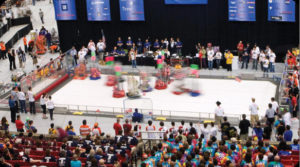
Acting on that realization, NI is actively going about encouraging the development of engineering abilities, not only at the university level, but in high schools and elementary education institutions. They are a major contributor to FIRST (www.usfirst.org), a not-for-profit organization, founded by Dean Kamen, that aims to inspire young people to be leaders in science and technology; it does so by sponsoring robotics competitions that are like scientific Olympics, complete with team uniforms and a large stadium for competitions.

NI has also been working with LEGO to create toys that preschoolers and kindergarten kinds can use to build and program simple robotic systems. And they are backing a competition called Moonbots (www.moonbots.org) in which small teams composed of children and adults compete to design, program, and construct robots that perform simulated lunar missions similar to those required to win the $30 million Google Lunar X PRIZE, a private race to the Moon to encourage commercial exploration of space.

The dedication of  all those involved with these projects gave me hope that perhaps that feeling of being misunderstood just might disappear in future generations. “We are creating a new generation of engineers and scientists,” said Almgren, and that generation may not only make me feel more comfortable, they just may solve a lot of the world’s problems. As Almgern noted, “they are the real stimulus package.”

Robots created by high schoolers compete in a FIRST event.

Batteries of the Future

September 13, 2009 by Steve Meyer  
Filed under Commentary, Green Energy

Battery technology has been getting a lot of focus in the last couple of years.  After all, you can’t have a decent electric car (or hybrid for that matter) without having the right kind of battery.  And, just one more time, battery technology is what prevented the marketing of the electric car after the oil embargo of the seventies, at least as far as the necessary technology goes.

So it isn’t surprising that almost $2B in cash is being invested to start 4 new manufacturing plants in Michigan to make lithium ion batteries.  The State of Michigan is giving tax incentives totalling over $500 million.  The DOE has put grants and development contracts in the hundreds of millions of dollars in the hands of some of the same companies.  So it looks like we have picked the winner, and we are taking steps to make sure that there is capacity available to make the product.  Or at least assemble it.  Some of the battery supply is supposed to be coming in from Asia.  No surprise there.

There are two major issues in any battery.  The basic chemistry and materials that go into it, and the manufacturing processes that go into making it.  The basic chemistry sets the boundaries for what is possible.  The materials side is important in terms of raw materials cost.  You don’t want to build something that is dependent on strategic metals.  And making sure that the primary materials are readily available.  Recent reports indicate that the lithium needed for the emerging battery market is available in the US, but there is even more in South America.

On the manufacturing side, it’s all over the place.  Mechatronics everywhere.  From manufacture of the primary cell in either a cyclindrical cell or a prismatic shape to the assembly of the final package.  Temperature sensors, fans for air cooling, voltage or current sensors for monitoring charge and output, non-conductive housings, high power density connector terminals.  It’s pretty busy getting it packaged right.

I was involved in the manufacturing processes for the Optima sprial wound lead acid cell.  Great piece of technology.  Really difficult to get the mechatronics right.  Winding multiple 4 foot long layers of lead mesh, separater membranes and stuff that looks like toothpaste into a perfect roll the size of a can of soda isn’t a process that gets worked out overnight.  So there’s probably quite a bit of work to do to get the volume up where it needs to be.

Battery technology, regardless of chemistry, depends on the amount of surface area available.  Same issue for fuel cells, or even combustion of gasoline.  In a sense, when fuel is atomized, the surface area of the fuel is increased.  So it’s not surprising that most of the improvements forecast in battery technology are a result of research in nanoparticles and other unique physical arrangments of the constituent parts.

And unlike the decades that it took to manage lead acid battery recycling, there is already a major effort to manage recycling and disposal of lithium.  The DOE is currently providing funding to a private company to expand it’s disposal capability to include lithium technology.

Electric Vehicles and Electric Motors

A friend of mine finally got delivery of a Tesla Roadster.  This prompted discussion of the drive train and the fact that Tesla has had to go from two speed transmissions which were failing to a transmissionless drive train.  The ultimate mechatronic challenge, the electric car, is also a challenger in terms of the precise  application of electric motor technology.

But it has to be said that the motor and drive solution for the electric car is not where the problem has to be solved.  Any motor can be made to run an electric car.  What is critical is how you apply it.  The starting conditions require high torque at low speed and the running conditions require low torque at high speed.  So, typically, what looks like a small 5 to 15 horsepower running requirement at full speed, becomes a 150 horsepower starting requirement depending on how quickly you would like to start.  If you want to keep up with a Corvette, it uses 450 HP to start.

And this produces a lot of confusion.  Why not use at 2 speed transmission to help the situation.  Fine, but the ones that are available can’t handle the dynamic response of the electric motor.

Can electronics help this situation?  Interestingly, yes.  There is a control algorithm generally called vector control which allows you to manage the rotor torque and stator torque separately.  By varying the phase angle between the two, like advancing and retarding the timing of a mechanical distributor cap on an internal combustion engine, you get different speed torque curves out of the motor.  COOL!  Is there any downside to this?

Yes.  You need more current to produce more torque.  That doesn’t change.  So you have to be able to supply the current, and you have to be able to manage the heat.  The heat is transitory since you only need the high current during starting, but it is best to have sophisticated software running to keep track of the RMS temperature of the motor.  Lower operating temperatures mean longer life and reduced risk of demagnetizing the motor.

So, yes, you can run an electric car with a garden variety AC motor, and with good electronics, you can make it run fairly efficiently.  With higher efficiency motors, the benefit is increased driving range from a given power source.  High efficiency motors are frequently smaller and lighter weigh, but a weight savings in the motor of 50 or even 100 pounds is not that big a factor in the driving range when the curb weight of the vehicle is 3000 pounds.

Basically, its F=ma.  If you can reduce the mass of the vehicle, you reduce the battery payload required to power the car.  Aluminum space frames, like on the Prowler, have been studied by the car industry and can reduce curb weight by 400 pounds and reduce cost by 10% at the same time.  We need to bring all the mechatronic leverage to the situation that we can, if we are going to make electric cars that make sense.  Before its too late for Detroit.

Mechatronic Top Ten – Hard Disk Drives

May 31, 2009 by Steve Meyer  
Filed under Automation

One of the mechatronic Top Ten applications has to be the hard disk drive.  Strangely, it is not an application that you hear much about.  That’s probably because unless you work on hard disk drive design, you pretty much take for granted that little black box that stores all your information. So the group that is actually pushing the design frontier of hard disk drive technology is a very finite group.  There are only a dozen companies actually making disk drives these days, after consolidation in the market has resulted from acquisitions and mergers over the last decade.

Worldwide consumption of hard disk drives is in the tens of millions per year, and like all things electronic and high volume, the industry produces ever more memory at ever lower prices.  The absolute value of hard disk technology is one of the most incredible bargains in the world.  The current state of the art is about 10 cents per gigabyte which is quite a bargain compared to the 1.5 Megabytes for the old 3.5″ mini floppy disk.  With seek times in the low milliseconds, memory is almost instantly available due to 7200 RPM platter speeds.  The 7200 RPM speed is the equivalent of 75 miles per hour at the edge of the platter.  Higher speeds have been delivered, but the thin aluminum platter is subject to “flutter” which can cause a head crash.

The spindle motor is a 3 phase dc brushless motor that is designed to accelerate the memory platter to the 7200 RPM running speed in just 2 or 3 milliseconds.  This is an incredible feat considering that the power available is limited to a small lithium battery.  Further, the spindle motor must coordinate it’s motion with a linear actuator to place the drive’s read head a few millionths of an inch above the platter surface at the exact target sector on the disk.  So, just getting the platter to spin, which is hard enough given the time constraints, is further complicated by the extreme challenge of coordinating the rotational motion with the linear motion of the read head.

What makes this all even more astounding is that the budget for the motor can only be a few dollars, given a retail selling price of $60 for the whole package including the memory.  I don’t know how these guys come up with the solutions, but they consistently do and they consistently do it at lower prices.  The last thing I remember reading about was the elimination of bearings in favor of fluidized bearings.  At 60 million units, saving money on bearings adds up to a lot of money.

One of the many ironies of the hard disk drive is that it is at the root of many improvements in industrial motion control.  The venerable 33035 controller chip from Motorola was developed specifically to run hard disk drives.  It later appeared in a number of industrial servo amplifier designs delivering precise control of higher current power to a variety of brushless dc servo motors.

You never know where the breakthroughs are going to come from, but we keep them coming.  Keep up the good work!

Top 10 Mechatronic Challenges

I recently wrote on the mechatronic challenge of wind power.  Converting wind into mechanical power that can be harnessed for man’s use has been going on since the 9th Century according to Persian historians.  Certainly wind powered grinding of grains has been around in Europe for several centuries and, lest we forget, wind power pumping of water in the United States.  So there is some irony to the cultural “buzz” about wind power at home and abroad, as if the technology were entirely new.  There’s a lot of history, we’re just updating the technology to produce energy in the age of electricity.

Water has been used for power generation as well.  Following a similar path, we learned during the early part of the industrial revolution how to locate manufacturing plants near waterways so we could convert water flow into mechanical power using the water wheel.  This is, in fact the root of all modern motion control.  All the belts and pulleys, cams, gear reduction systems follow from the work done in mechanical engineering from this period of time.  All of the electronic analogs of the mechanical behaviors found in mechanical systems are the functions which we refer to in mechatronics today.

Wind power and water power gave way in the 1800’s to steam power as the improved steam engine of Watt became the standard of energy efficiency, or should I say “cost effectiveness”.  Because the absolute value of technology is in its cost effectiveness.

Still, wind energy poses a huge technology challenge, as witnessed by the number of vairations that exist and new versions that are emerging.  And hopefully improvements will continue to come from the creativity and  imagination of engineers and inventors all over the world.

But what are the other big mechatronic challenges that come to mind?

Transportation certainly ranks in the top 10.  We have seen hydraulic, pneumatic and electric vehicle solutions touted for a variety of uses, personal transport, delivery vehicles etc.  Ballard Energy and General Motors have both been building hybrid and pure electric buses for city transportation systems for several years with some success.  Interestingly, the electric bus is easier to engineer, which seems unreasonable, but the bus has more interior space to put things like batteries and a methanol converter for generating hydrogen for fuel cells.

But there is a great lesson in what appears to be an almost chaotic string of choices in the transportation arena.  One solution will not work for all requirements.  There are many people for whom a 40 mile per day drive cycle is perfect.  The NEV, Neighborhhod Electric Vehicle, is a golf cart type solution that is rated for street usage, and because of its relatively simple performance requirements, is relatively easy to achieve and lowe cost.  As we categorize cars with greater range, the problems get more difficult, and because of the storage limitations of batteries, have only been achievable as hybrids.  But with some hybrid designs reaching 50 and 60 mpg (estimated), these vehicles may be great solutions for other users.  Although, we must consider their cost effectiveness.  If they cannot be introduced at prices well below $50,000 the absolute value of the technology is not very good.

So forget the 15 second soundbyte that will solve the world’s problems.  It doesn’t presently exist.

I would like to hear from any readers about their picks for the Top Ten Mechatronic Challenge.

Next Page »