

The Healthcare Robotics Startup Catalyst program objective is to provide startups with connections, guidance and resources.
Festo introduces UR+ certified multi-axis solution
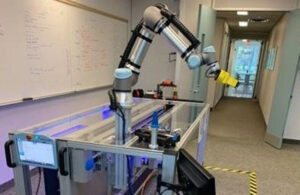
The certified UR system adds up to four axes of motion beyond the UR cobot six axes, and embodies Festo world-class precision.
Festo introduces pneumatic cobot arm
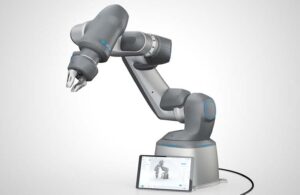
Festo’s cobot uses six pneumatic direct drives, instead of the typical electric motors and mechanical transmission, to move.
Festo, MassRobotics to celebrate healthcare robotics innovation
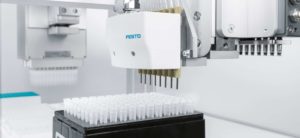
At the Healthcare Robotics Engineering Forum, the Festo-MassRobotics Healthcare Robotics Startup Catalyst will celebrate the milestones achieved four startups.
4 startups selected for inaugural healthcare robotics catalyst
Assistive Technology, Bionomous, Eureka Robotics and Kinarm will have access to subject-matter experts and also receive technical and marketing support.
Festo advances robot programming with AI

Festo partners with several international companies and universities to develop the capabilities of FLAIROP – Federated Learning for Robot Picking
How AMP Robotics is changing recycling; Festo wins gripper challenge
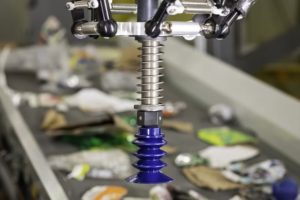
Welcome to Episode 29 of The Robot Report Podcast, which brings conversations with robotics innovators straight to you. Join us each week for discussions with leading roboticists, innovative robotics companies, and other key members of the robotics community. You can subscribe to The Robot Report Podcast on Amazon Music, Apple Podcasts, Google Play, SoundCloud, Spotify and more. Please subscribe to the podcast and leave us a…
Festo, MassRobotics partnership focuses on next-gen robotics
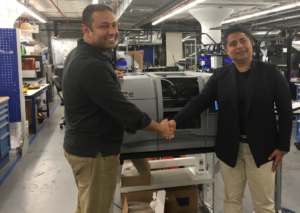
Festo has entered into a strategic partnership with MassRobotics, based in Boston, to further global market growth and innovation initiatives dedicated to the development of the next generation of robotics. MassRobotics, the independent, nonprofit group serving as an innovation hub for robotics and smart connected devices, works to foster a collaborative space in which to…
Magswitch magnetic robot grippers now available from Festo
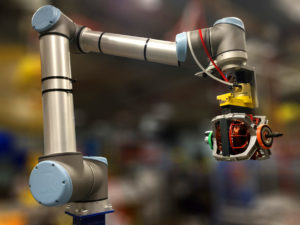
Magswitch switchable magnets, now available through Festo, can improve the productivity and quality of stamping, welding, and pick-and-place operations.
Robo Firefly drone goes small for efficiency, waits on crowdfunding

Robo Firefly ultralight drone faces headwinds in crowdfunding campaign.
Festo eMotionButterflies, Bionicopter to take flight at Robotics Summit

At the 2019 Robotics Summit & Expo in Boston, Festo will exhibit its industrial automation on the show floor. The company will also provide a biologically inspired flying robot at the networking reception after Day 1.
Motion control trends to learn about at Robotics Summit & Expo 2019
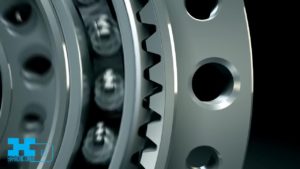
Motion control is among the enabling technologies for commercial robotics to be discussed at the 2019 Robotics Summit & Expo. Attendees can learn from sessions and workshops, meet component vendors, and learn now new developments can help them.
Festo’s Bionic robots merge pneumatics, artificial intelligence

Whether it’s grabbing, holding or turning, touching, typing or pressing — in everyday life, we use our hands as a matter of course for the most diverse tasks. In that regard, the human hand, with its unique combination of power, dexterity, and fine motor skills, is a true miracle tool of nature. What could be…
Festo Bionic Learning Network adds robot bats, fish, spiders
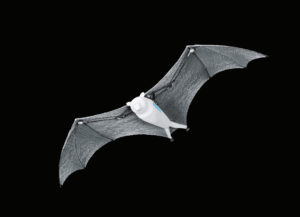
The Festo Bionic Learning Network has released it latest biomimicry innovations to support ongoing research in engineering, manufacturing, and materials science drawn from natural systems. Here are the 2018 additions to the Festo Bionic Learning Network: A transforming spider that rolls or creeps A robotic fish that autonomously maneuvers through acrylic water-filled tubing A semi-autonomous flying…
Festo Online Configurator slashes OEM engineering costs and speeds delivery for Cartesian robots
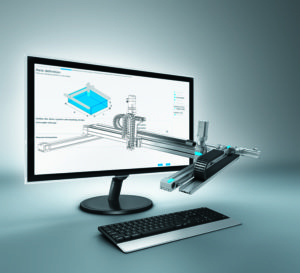
Festo introduced today the Handling Guide Online configurator for Cartesian robots. This new productivity tool significantly reduces engineering overhead for original equipment manufacturers (OEMs) and speeds delivery to laboratory equipment, electronic light assembly, end of line packaging, food and beverage, automotive, and machine tool manufacturers. More after the jump. Equipped with basic application information such […]
Electric Actuator EGC

Festo announces the addition of the Electric Actuator EGC to the family of electromechanical actuators. The EGC is designed for high dynamic speeds and high rigidity. This modular actuator can be used as an individual component adapted to third-party motors or as a complete system provided by one source – Festo. The EGC offers a […]
Mission: Efficiency

Think-tank for mechatronics and miniaturization How do machinery and equipment manufacturers keep up with worldwide competition? With (energy) efficient solutions! “Mechatronics, miniaturization, piezo technology and systems technology are catchwords which aren’t just pointing the way towards more efficiency in emerging business areas like photovoltaic”, says Dr. Eberhard Veit, chairman of the board of directors at […]
Intelligent Automation Trio
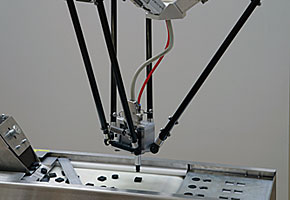
When it comes to repositioning small parts quickly and flexibly, the combined tripod camera system really hits the mark. This complete solution from Festo, consisting of robotic controller, high-speed camera and fast electric drives, is delivered as a ready-to-install subsystem, thus saving both time and money.
One Size Never Fits All
Sometimes a lot is made of new technology. There is a tendency to talk about the next big thing in whatever field as “The Solution”. But there’s rarely just one solution that works for everyone. Currently in the “car wars” (a favorite topic, since we are all effected by gasoline prices) many ideas have been […]